One of the biggest questions I get asked is WHY MY BATHROOMS IS LEAKING which is a loaded question but most homeowners are concerned by the presence of dampness, mould or flaking paint surrounding the bathroom area.
I am here to shine a light on the possibility that your bathroom floor plumbing could be the problem.
If you are renovating a bathroom that was built before 1990 in Australia you will want to ask your bathroom renovator or plumber if you have galvanised pipes in your bathroom floor because it could end up costing you hugely if not changed over.
Below we will cover a bunch of questions to ask and consider.
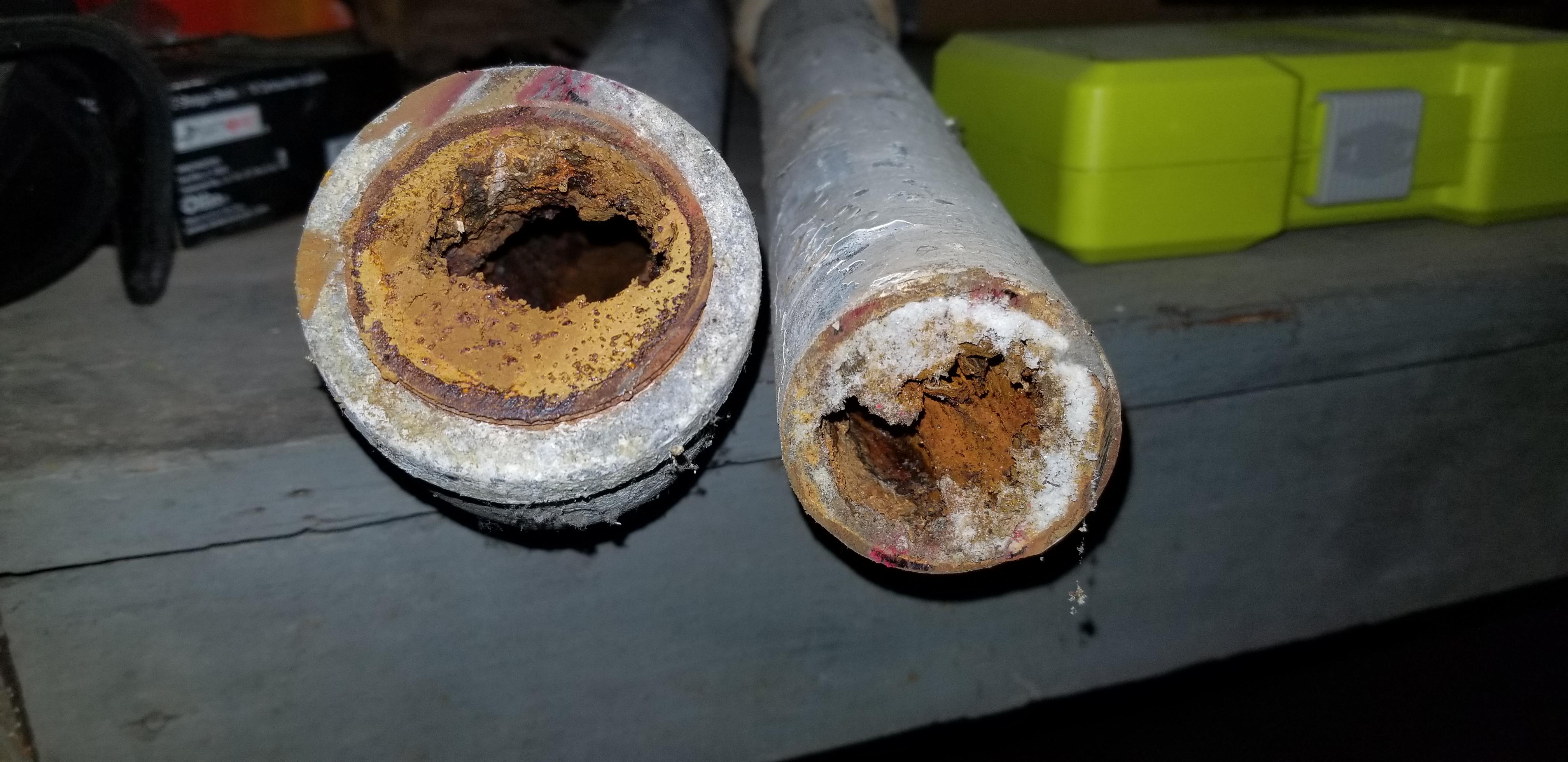
What is a galvanized pipe?
For those playing at home galvanized pipes are steel pipes that have been dipped in a protective zinc coating to prevent corrosion and rust.
These types of pipes were installed into the bulk of Australian homes built before 1990. The piping was invented and intended to be an alternative to the lead pipe which had been having issues.
How long do galvanized pipes last in bathrooms?
Nothing lasts forever, but galvanized pipes have a life span of between 40 to 80 years roughly. If your home’s pipes are from the 1990s or earlier, they are likely nearing the end of their functional life span. However, there’s a reason galvanized pipes are no longer used in modern construction: the risk they pose to a home’s water supply and people’s health.
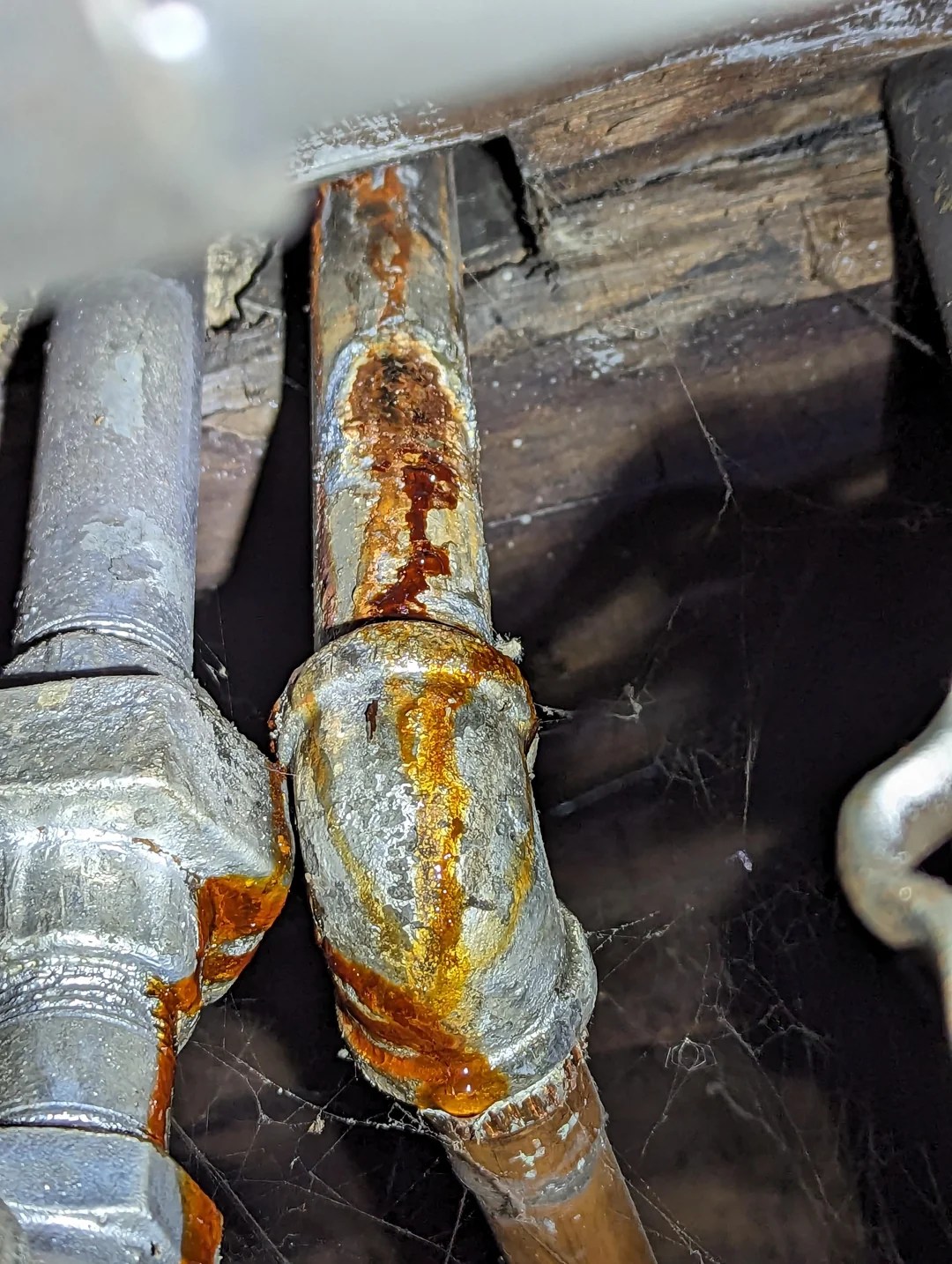
Are there safety risks or concerns with galvanized piping?
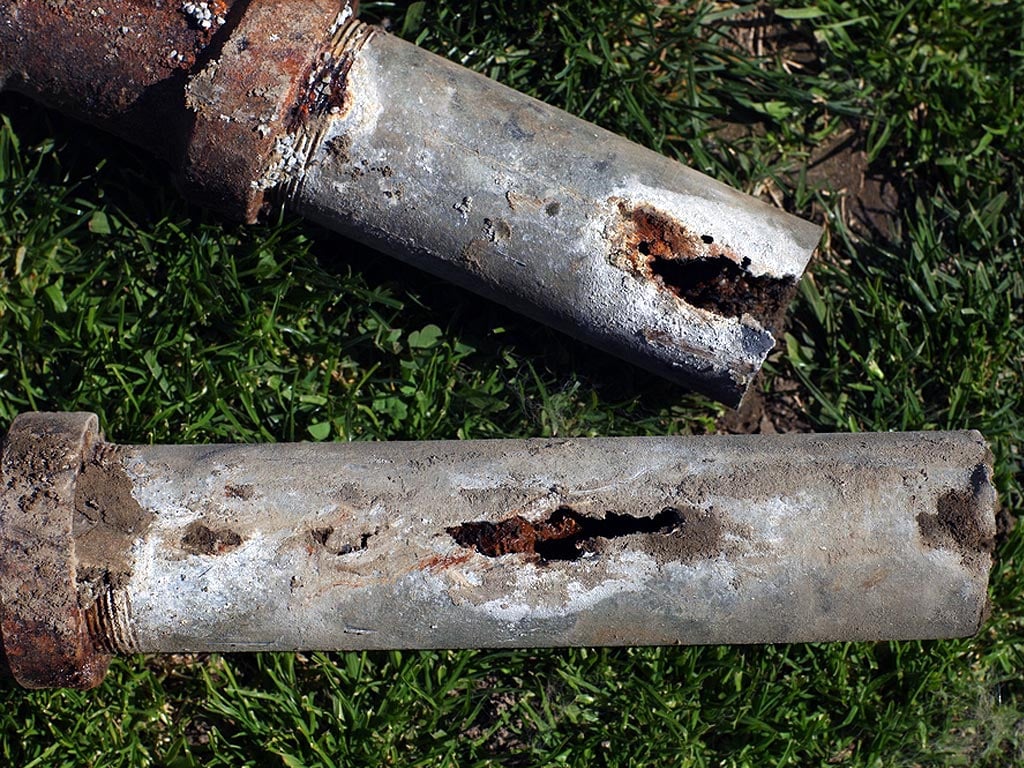
Over time, it causes a reduction in water pressure, pollutes your home’s water and as rust plus corrosion deepen, they compromise the piping system’s stability and cause leaks.
In relation to bathrooms the rusted pipes in the bathroom floor could leak under the tiles or into the walls causing rising dampness.
How can I tell if I have galvanized pipes?
When it comes to telling if you have galvanised pipes below is a quick test you can do.
Simply grab a flathead screwdriver and a strong magnet. Start by finding your water line and scratch the outside of the pipe with the screwdriver.
Copper
The scratched area will look like a copper penny. A magnet will NOT stick to it.
Plastic
The scratched area will appear ivory or white in colour. A magnet will NOT stick to it.
Galvanized steel
The scratched area will have a silver-gray colour. A strong magnet will stick to it.

What does the galvanized piping removal process entail?
For a permanent fix, replacing all galvanized pipes is the best option, as it ensures all the rust and lead in the piping system is completely removed.
During the bathroom renovation phase after removal, a plumber would cut open the floor and replace all the galv to the outside and replace with PVC which will eliminate any risk.
Final Thoughts
When it comes to bathrooms built before 1990 it is important to get your bathroom pipes checked before continuing the renovation process.
Old rusted pipes left in your new beautiful bathroom floor most likely will cause you issues in the future so its important to often pay the extra to make sure you won’t be redoing it in the not-to-distant future.
Like any renovation though it is important to get a local plumber to access your bathroom and give it the seal of approval.
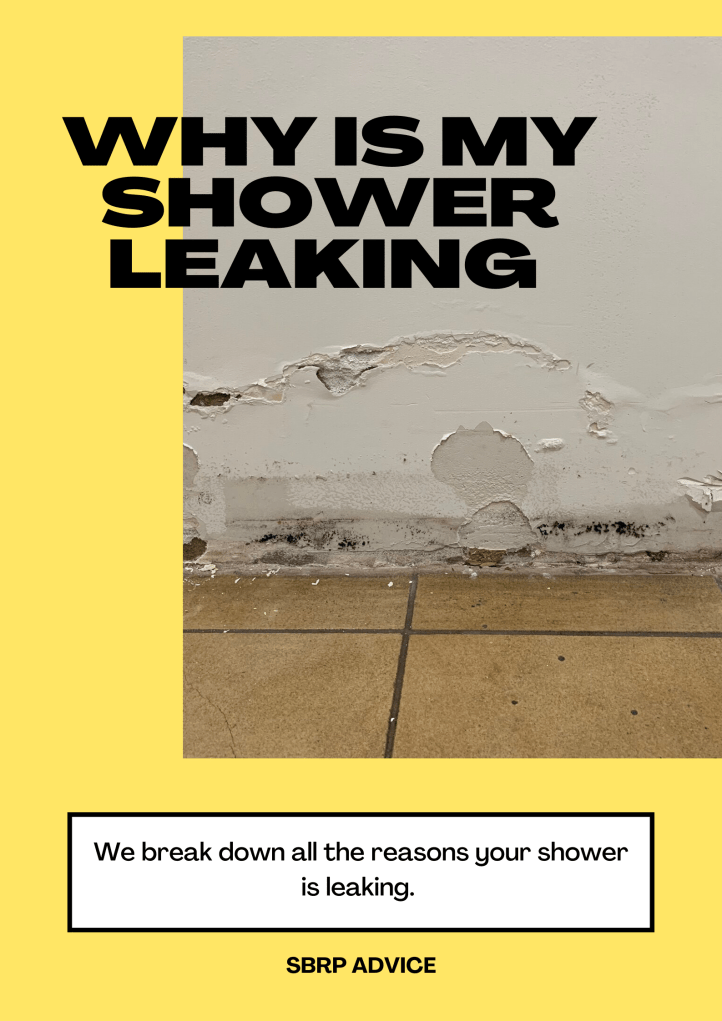
For more information on why bathrooms leak CLICK HERE or below
It’s important to note that all our advice is general in nature and all bathrooms are unique so always speak to your local qualified tradesman for the best advice. If you are looking for a bathroom renovation quote and live in Perth, Western Australia just email us at smallbathroomrenovations@gmail.com
Looking for more content – Check out all our socials below and give us a follow for more awesome ideas and inspiration.
check out our Instagram page with tons of inspiration CLICK HERE
Follow Us On Facebook
 Small Bathroom Renovations Perth | Bathrooms Perth